
Glastrix — Material Comparison
Film vs. UV Print on Glass: Durability, Costs, and the Right Choice for Your Project
Film vs UV print on glass — which lasts longer? An honest comparison for B2B buyers.
Eric Frank · Founder & CEO, Glastrix Berlin-Kreuzberg
Anyone who wants to customise glass surfaces — for kitchen splashbacks, shopfronts, exhibition stands, or room dividers — eventually faces this question: adhesive film or UV direct print? The comparison of film vs. UV print on glass in terms of durability is not an academic debate but a concrete decision with direct consequences for maintenance costs, appearance, and service life. Interior designers, shopfitters, and hospitality operators who regularly carry out such projects know: the wrong choice becomes expensive after a few years — not through the initial cost itself, but through replacement, rework, and complaints.
What distinguishes adhesive film from UV direct print on glass?
Both methods allow custom graphics on glass surfaces but differ fundamentally in their technique and therefore in their long-term properties.
Adhesive films are printed separately and then applied to the glass. The graphic sits between film and glass surface — or, for exterior film, unprotected on the surface. Quality and durability vary greatly depending on the film manufacturer, laminate layer, and application precision. Bubbles, edge lifting, and yellowing are typical long-term problems, particularly in humid environments or under direct UV exposure.
UV direct print applies ink directly to the glass surface. Specialised UV-curing inks are photochemically cured within milliseconds and bond firmly to the substrate. The result is a compact, flexible print layer resistant to water and solvents — no adhesive joint, no air inclusions, no edge problems.
Film vs. UV print on glass — durability in direct comparison
The differences between both methods only become fully visible in long-term use:
- Moisture resistance: UV-printed surfaces are completely waterproof. Kitchen splashbacks, wet room cladding, and outdoor installations withstand steam, splashwater, and cleaning agents permanently. Adhesive film in wet rooms tends to lift at the edges — with intensive use, often within a few months.
- UV light resistance: Premium UV print with pigment-based inks barely fades over years. Films — especially cheaper products with laminated overlays — can warp or yellow under sunlight.
- Mechanical durability: Due to UV curing, directly printed surfaces are more scratch-resistant than adhesive layers, which are more easily damaged by abrasive cleaners or sharp objects.
- Long-term optical stability: UV print retains colour depth and detail sharpness without visible change. Film edges become visible over time — a particularly critical effect under backlighting or raking light.
- Replaceability: Film can in principle be replaced, but it leaves adhesive residue and requires surface cleaning. UV print is permanent — an advantage for stable brand designs, but less suitable if content needs to change frequently.
For temporary applications — seasonal designs, short-term campaigns, rental spaces with regularly changing content — film can remain a pragmatic choice. For permanent installations with high usage intensity, UV direct print on glass is clearly superior in terms of durability.
Practical examples: when UV print on glass is the better decision
In daily project work, certain applications almost require the UV process:
- Hospitality businesses and hotel lobbies: Glass surfaces are cleaned daily with alkaline agents here. Film lifts under these conditions — typically within a few months in practice. UV-printed partitions, wall panels, and counter fronts withstand cleaning cycles permanently.
- Retail and showrooms: Brand designs on glass shelving, display cases, and entrance doors are long-term investments. UV print delivers sharp logos, pantone-accurate colours, and flawless edges without any lifting risk.
- Galleries and exhibition spaces: Artistic installations on glass, acrylic, or mirror require exact colour reproduction over long periods — a core strength of UV direct print.
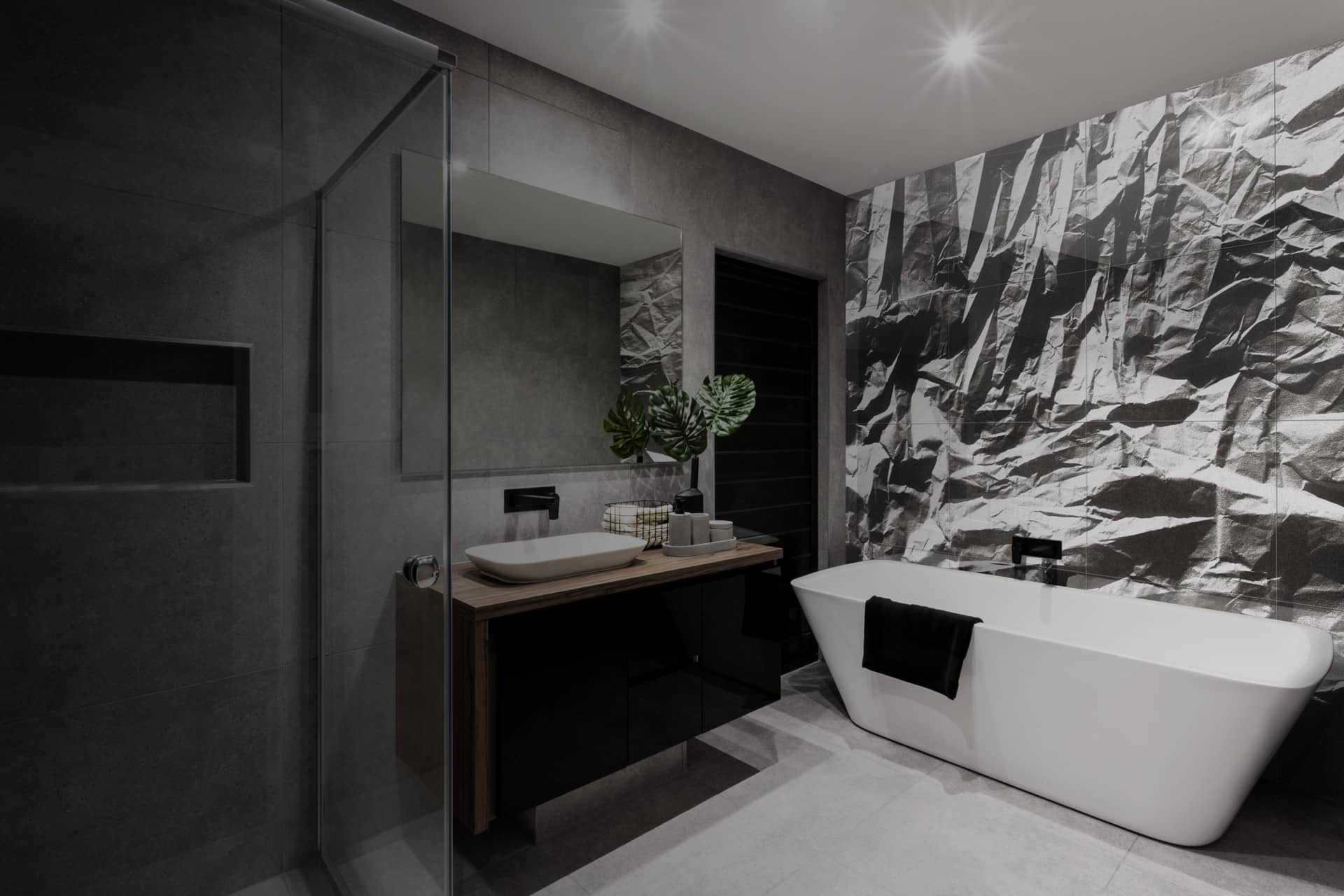
- Kitchen splashbacks in residential and commercial projects: The classic application for printed glass. Behind the hob, moisture, grease, heat, and aggressive cleaners are present daily — a combination that quickly pushes adhesive film to its limits and marks UV direct print as the technically superior choice.
Lifecycle costs: why the cheaper upfront price is misleading
In the first comparison of quotes, film often appears less expensive than UV direct print. This cost advantage relativises as soon as you consider the project timeline over five years.
Adhesive film on glass in commercial use typically requires replacement within a few years. Dismounting, re-mounting, and disposal add to material costs. UV-printed glass splashbacks and retail installations last ten years or more with proper care — including in professional kitchens with aggressive cleaning agents or in retail with daily visitor traffic.
For interior designers and commercial project buyers who want to deliver sustainable quality to their clients, this lifecycle comparison is a compelling argument. Some offices now explicitly list UV print on glass as a quality standard in their material specification — not as a premium option, but as the minimum standard for permanent installations.
Glastrix: UV print on glass without minimum order
Glastrix has been producing UV direct prints on glass, metal, wood, acrylic, ceramic, copper, and mirror in Berlin-Kreuzberg since 2015. B2B customers from interior architecture, shopfitting, hospitality, and retail value above all: no minimum order (single pieces, prototypes, and short runs produced alongside large orders), custom formats (cut to exact specification, no imposed standard sizes), and white-label fulfilment (EU-wide direct delivery to end customers without Glastrix branding).
From Our Production
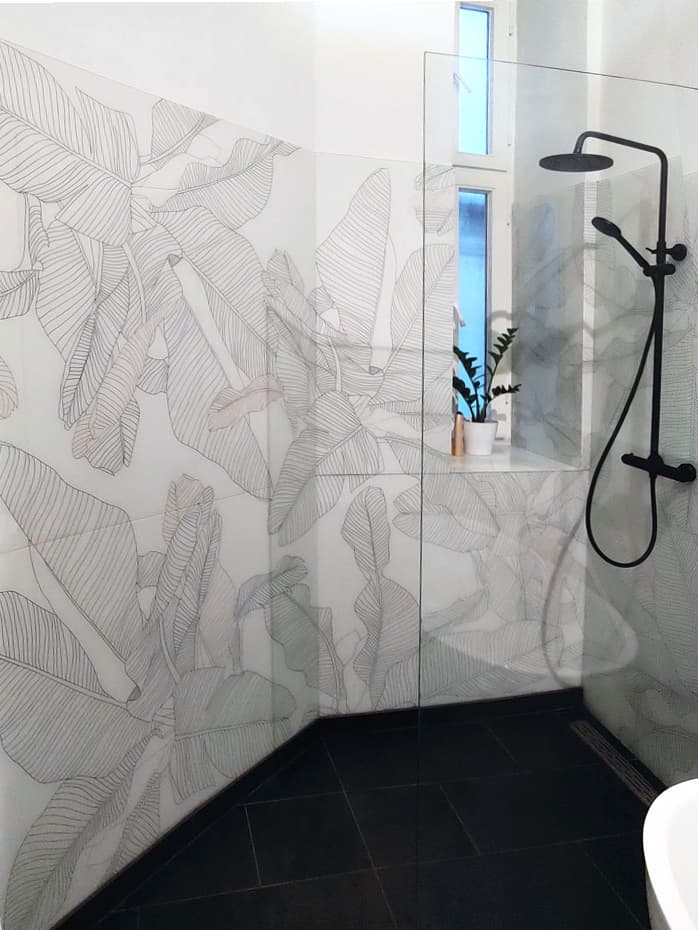
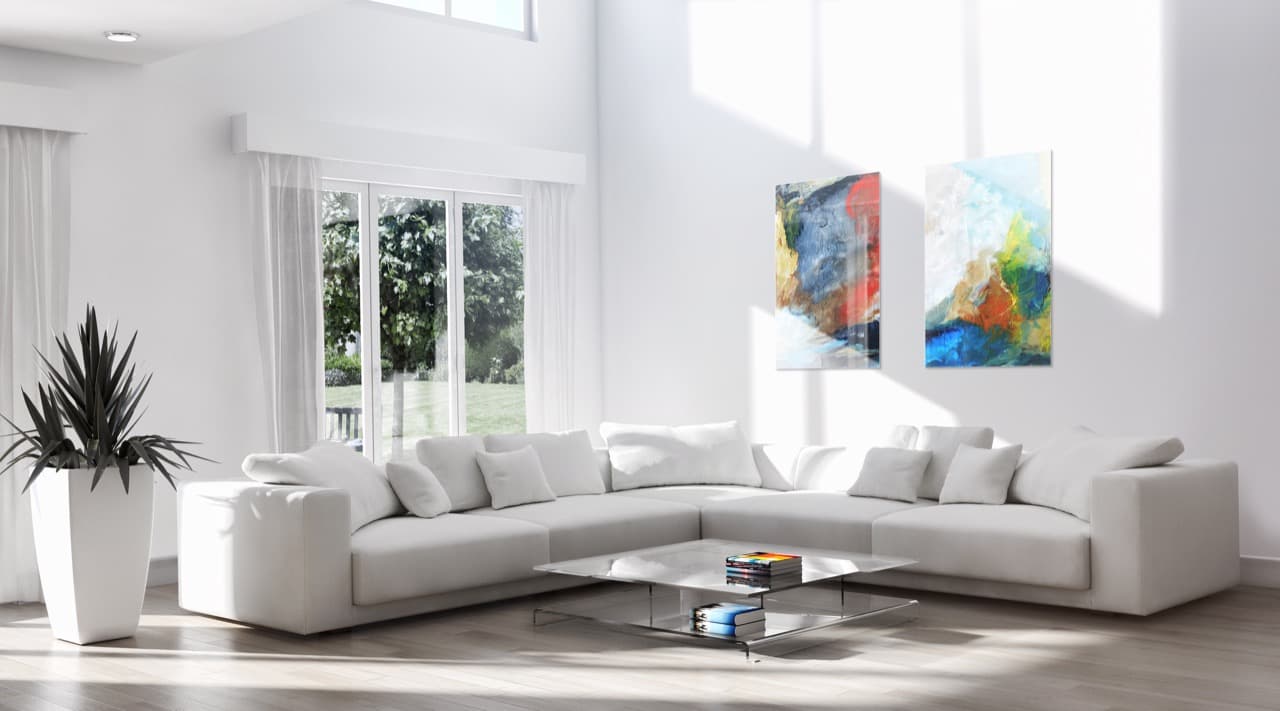
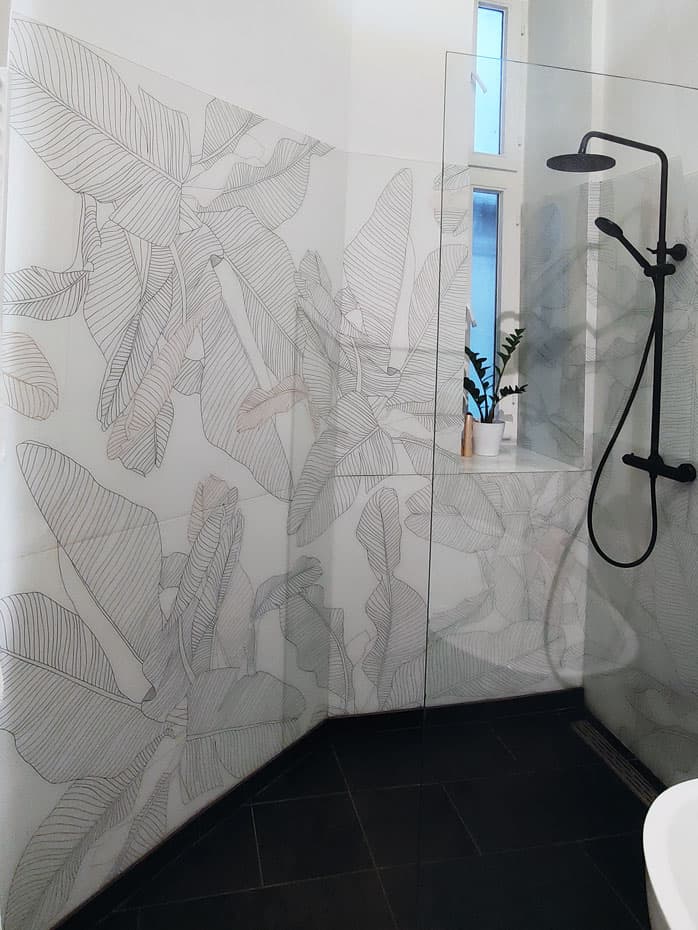
Every installation custom-made — no minimum, no setup fee.
Request a free test printFrequently asked questions
Why does adhesive film peel from glass in wet environments?
Adhesive film is bonded to glass — the adhesive layer degrades over time under steam, moisture, and alkaline cleaning agents. At the edges, film often begins lifting in humid environments within months. UV print on glass has no adhesive joint; the cured ink is permanently water- and chemical-resistant.
How long does UV print on glass last compared to adhesive film?
UV-printed glass splashbacks and retail installations last ten years or more with proper care — including in commercial kitchens or hospitality environments. Adhesive film on glass in commercial use typically requires replacement within a few years, with dismounting and re-installation costs adding up.
When is adhesive film still the better choice?
For temporary applications — seasonal designs, short-term campaigns, rental spaces with regularly changing content — film remains practical. UV direct print is permanent and cannot be removed without residue. For installations with a lifespan under one year, film may be the more economical choice.
Is UV print on glass worth the higher upfront cost?
Yes, when viewed across the life cycle. UV-printed glass surfaces require no replacement for many years — no removal costs, no adhesive residue cleaning, no re-commissioning. For interior architects and project buyers specifying sustainable quality, the life-cycle comparison is the decisive argument.
Is UV print on glass suitable for exterior applications?
Yes. UV-cured inks are weatherproof. For permanent outdoor use, Glastrix recommends ESG as the substrate — corrosion-resistant and stable under weather exposure. Film yellows and warps outdoors significantly faster than UV-printed glass.
“We have already worked with Glastrix on several projects and are always impressed by how quickly and competently solutions are found and realised. We know of no better address in Berlin for prints. Thank you very much!”
Request a free test print
No setup fee. No minimum. We print your artwork on glass — so you can see the quality before you order.
From 1 piece · 48h · No minimum order