
Glastrix — Interior Design
UV Print on Glass: A Practical Guide for Interior Design
UV direct print on glass for interior designers and architects — no minimum, no film.
Eric Frank · Founder & CEO, Glastrix Berlin-Kreuzberg(aktualisiert August 2026)
Anyone specifying custom glass surfaces quickly faces a fundamental choice: adhesive film or direct print? UV direct print on glass has established itself in interior design over recent years as a serious technique — precise, durable, and without any carrier film. For designers who need bespoke single pieces or small-run projects, this technology is now standard practice. This guide explains how UV print on glass is best applied in interior design projects, what matters technically, and when the added complexity clearly pays off compared to conventional methods.
What is UV direct print on glass — and how does it work?
UV direct printing describes a process in which UV-curing inks are applied directly to the glass surface. A UV flatbed printer moves across the material and simultaneously exposes the freshly applied ink to UV light — the colour polymerises within milliseconds and bonds permanently to the glass, without any laminate or adhesive film between.
The result is a scratch-resistant, lightfast, and moisture-resistant print that integrates seamlessly into the glass surface. Depending on the printhead and software, a range of surface effects are achievable — from flat and satin-matte to three-dimensional relief structures through multiple passes. Compared to screen printing, there is no expensive plate-making process, which makes single pieces and very small runs economically viable. That is precisely where the decisive advantage lies for most interior architecture projects.
When does UV print on glass pay off in interior design?
The technology comes into its own whenever high design freedom meets limited quantities. Typical scenarios:
- Custom pieces: Every panel can be produced in its own format and with an individual design — no extra cost for changing designs.
- Prototypes and design samples: A design can be realised at 1:1 scale as a single piece before committing to a series.
- Projects without minimum quantities: Whether a single shower splashback or a two-part room divider — UV direct print scales down without a surcharge.
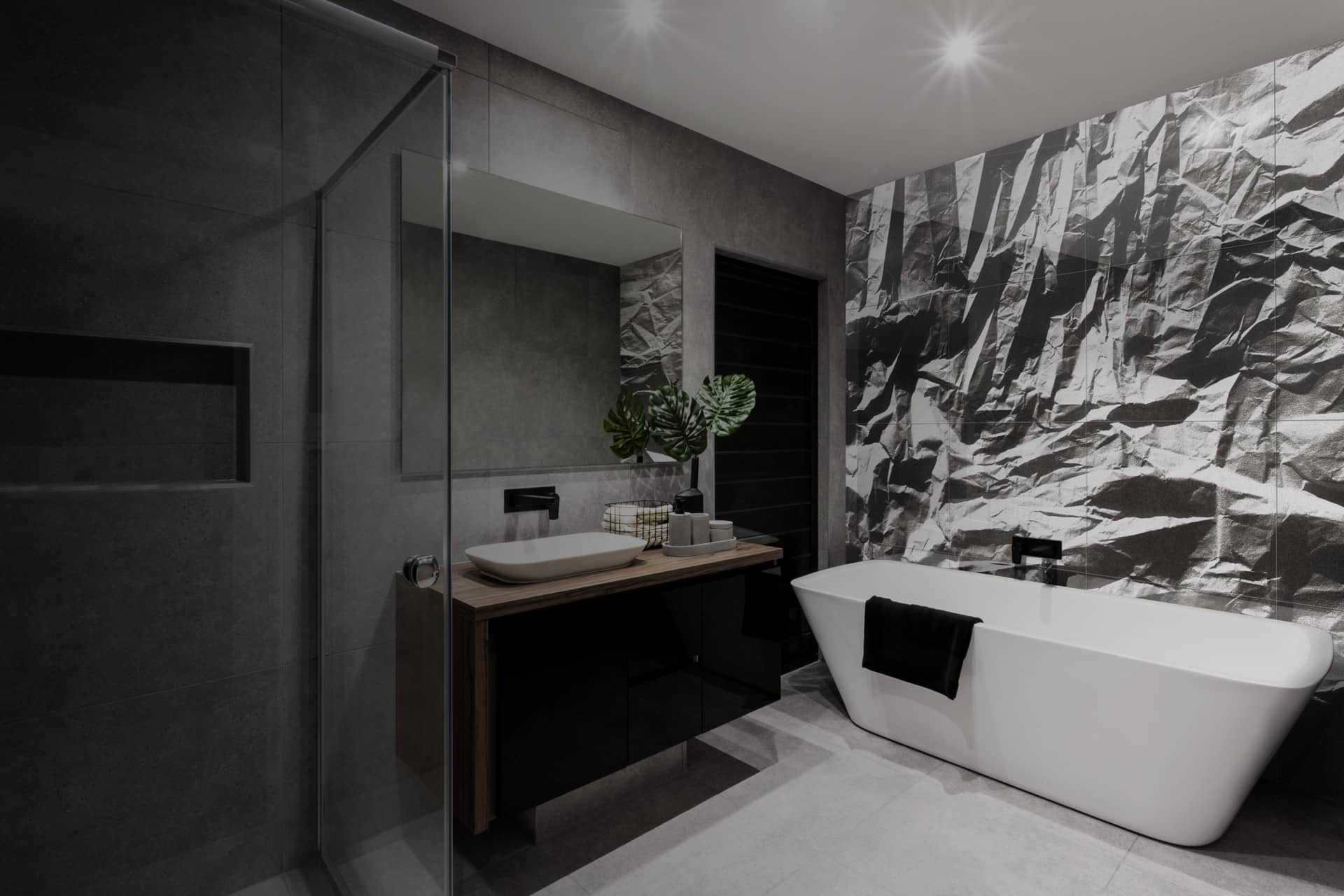
- Wet rooms and hygiene zones: The UV layer is permanently water- and chemical-resistant, making it particularly suitable for bathrooms, kitchens, and food service areas.
For projects with very high quantities — such as standardised tile-look finishes across several hundred square metres — ceramic digital printing or screen printing may be more cost-effective. In those cases, a direct conversation with the print lab is worthwhile to match the process to the actual project scope.
Applications: from restaurant to gallery
In practice, UV print on glass is applied across a growing range of industries and project types:
- Food service: Printed glass panels behind bars, in commercial kitchens, or as room-dividing elements. The design is more durable and hygienically safe than any adhesive film, including in wet zones.
- Retail: Shop windows, display partitions, or shelving backdrops with brand identity. Small runs for pop-up stores are just as feasible as coordinated roll-outs for chains.
- Galleries and museums: Designs printed directly onto glass or acrylic glass achieve a depth and brilliance that other print substrates rarely match — especially with backlit panels.
- Corporate interiors: Glass doors, partitions, and reception areas with corporate design elements. Large-format glass installations carrying brand messages are among the most in-demand B2B commissions in commercial fit-out.
- Residential: Shower walls, kitchen splashbacks, and furniture glass fronts with custom designs — one of the fastest-growing segments in private interior work.
Technical considerations and material selection
- Glass type: Float glass, toughened glass (ESG), laminated safety glass (VSG), and mirror can all be printed. ESG must be thermally tempered before printing — post-processing after the print run is not possible without shattering the glass.
- Print side: Direct printing on the front face or reverse printing produces visually different results. With reverse print, the design sits behind the glass and appears spatially deeper.
- White underlay: On transparent glass, a white ink layer enables rich, opaque colours. Without white, colour tones appear translucent and vary significantly with ambient light.
- Format and material thickness: UV flatbed presses work within defined clearance heights. Heavily curved panels or unusually thick laminated glass may fall outside the printable range.
- Surface condition: Heavily coated glasses — such as low-E glass with heat-protection coatings — require pre-treatment of the print surface.
Involving the print lab early in the planning process avoids costly corrections mid-project. A technical enquiry with material specifications, format requirements, and the desired surface effect is typically answered by a specialist supplier within one working day.
Why Glastrix for interior design projects
Glastrix has been producing in its own facility in Berlin-Kreuzberg since 2015, supplying interior designers, retailers, galleries, and food service businesses across Germany and the EU. No minimum quantity, custom cuts at no extra charge, short lead times for deadline-driven construction projects, and white-label fulfilment for trade and planning offices that handle orders under their own name.
Anyone working with UV direct print on glass for the first time can request a free test print in advance: a sample in their own artwork and material, before the final order is placed.
Interior Design Projects by Glastrix
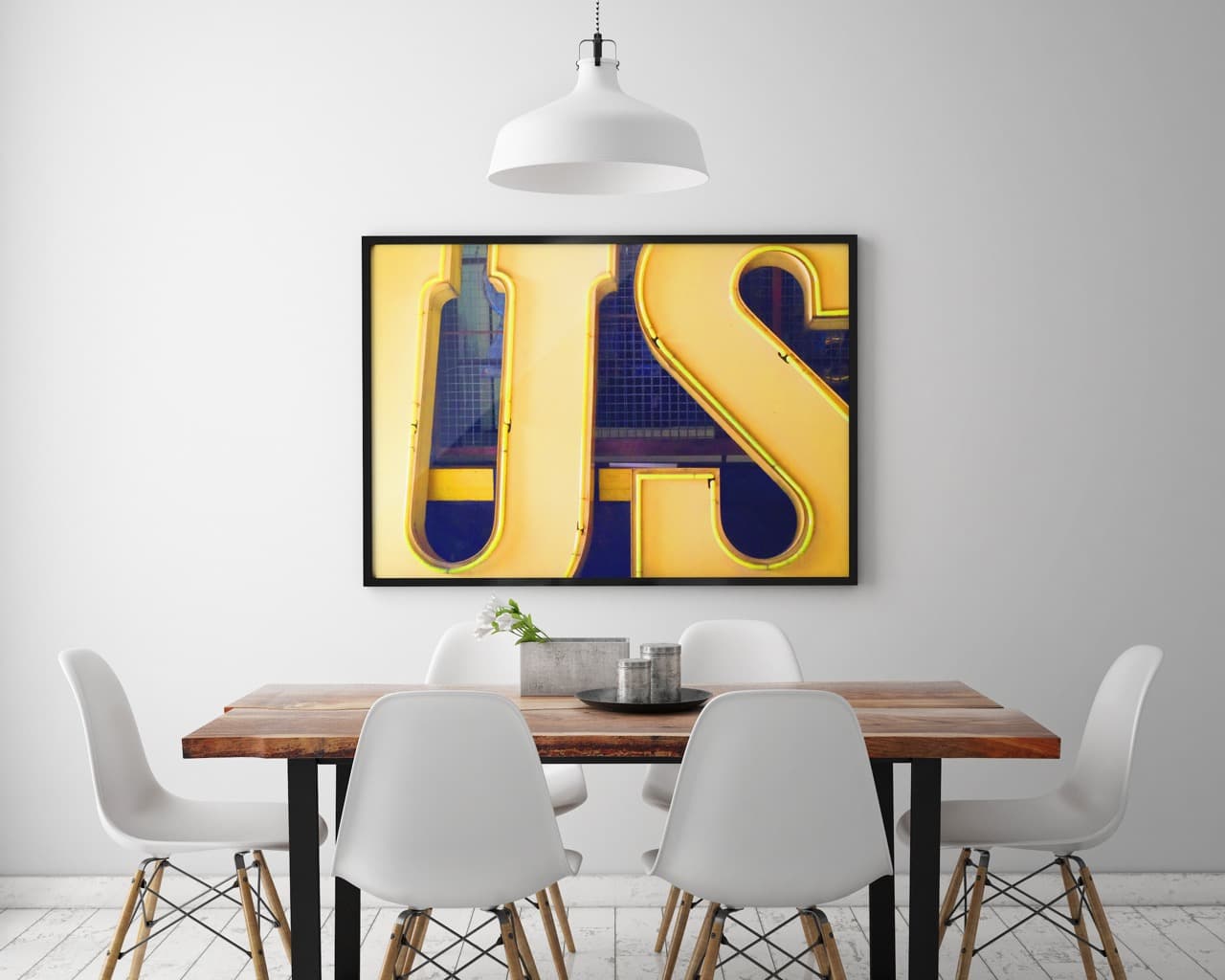
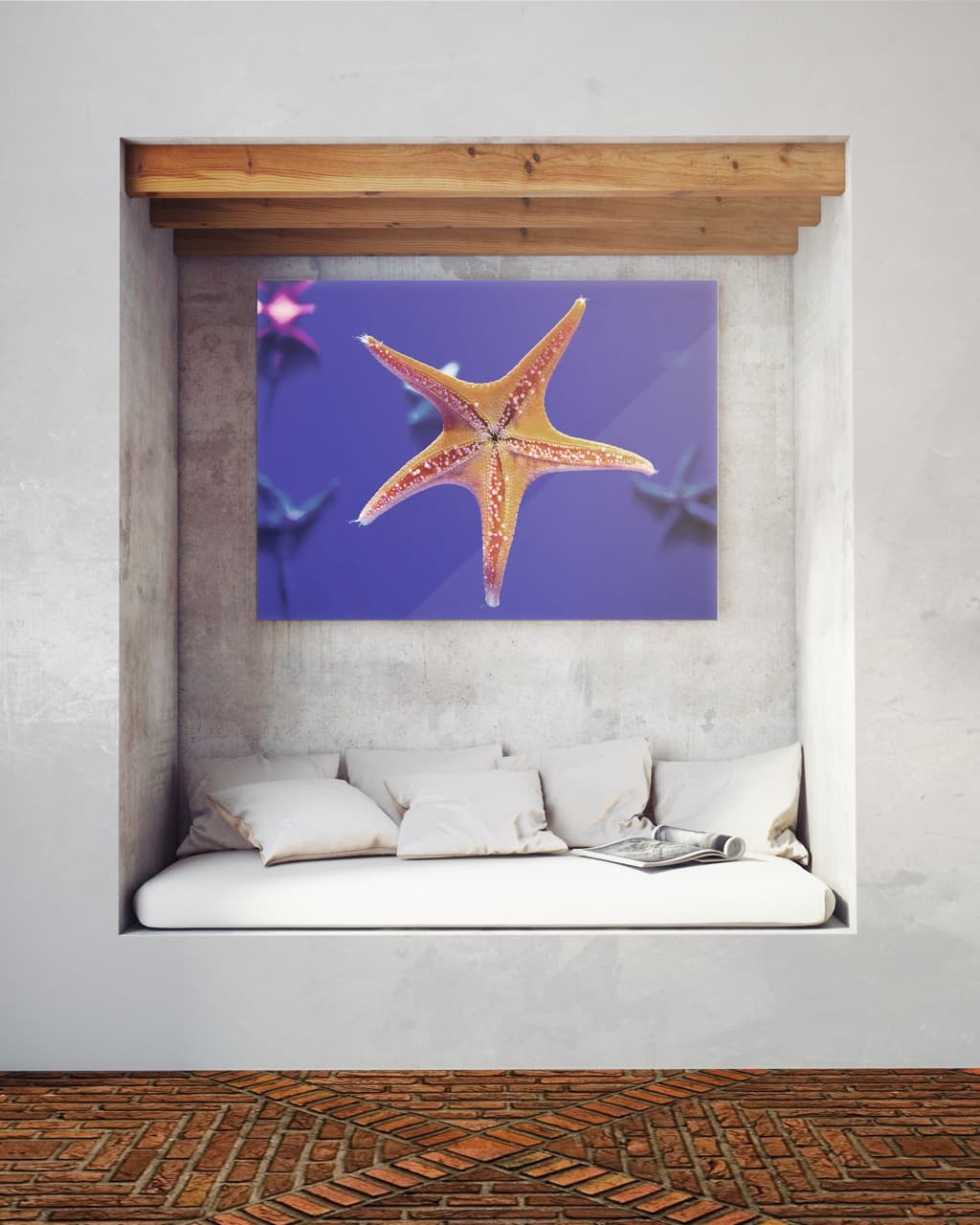
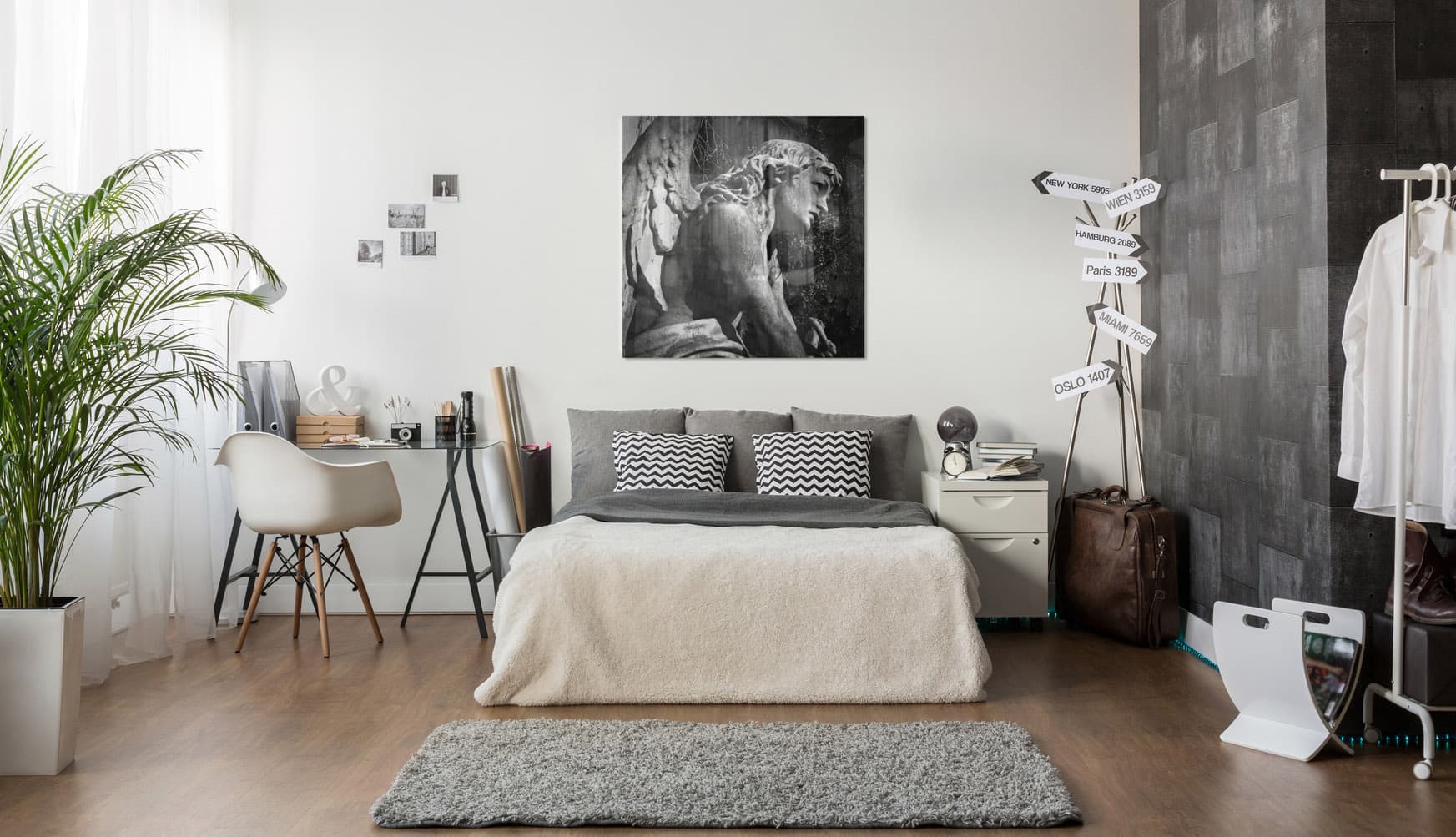
Every project custom-made — no minimum, no compromise.
Request a free test printFrequently asked questions
When does UV direct print on glass make more sense than vinyl film?
UV ink polymerises permanently into the glass surface — no film to peel, bubble, or degrade under cleaning chemicals. For wet rooms, kitchens, and commercial installations, UV direct print outlasts vinyl by years with zero maintenance. Every piece can also have its own custom size and artwork with no setup cost.
Is UV-printed glass suitable for wet rooms like bathrooms and kitchens?
Yes. UV ink is permanently water- and chemical-resistant. UV-printed glass splashbacks are suitable for kitchen walls, shower enclosures, and commercial kitchens — the material meets standard hygiene requirements for food service environments.
What is the difference between front printing and reverse printing on glass?
Front printing places the design on the viewing side of the glass. Reverse printing places the design behind the panel, viewed through it — adding perceived depth and protecting the print from physical contact. For reception desks, partitions, and double-sided installations, reverse print is the recommended approach.
Does toughened glass (ESG) need to be fully processed before printing?
Yes. ESG must be thermally tempered before printing. Post-processing after the print run — cutting, grinding, or drilling — is not possible without shattering the glass. All dimensions and cutouts must be finalised before file approval.
Can I order a single sample or prototype before committing to a series?
Yes. Glastrix offers a free test print in your own artwork and material — one piece before the final order. Beyond that, there is no minimum quantity: single pieces and short runs are produced at the same unit price as larger orders.
“Glastrix is a dream for artists and other practitioners that wish to work with someone who is dedicated to the creative process. Eric and I spent hours in the studio together developing catered approaches to printing on the strange materials I brought in, and I am excited to continue this process.”
Request your interior design project
No minimum order, 48h production. UV print on glass — custom-made for interior designers and architects in Berlin and across Europe.
From 1 piece · 48h · No minimum order