
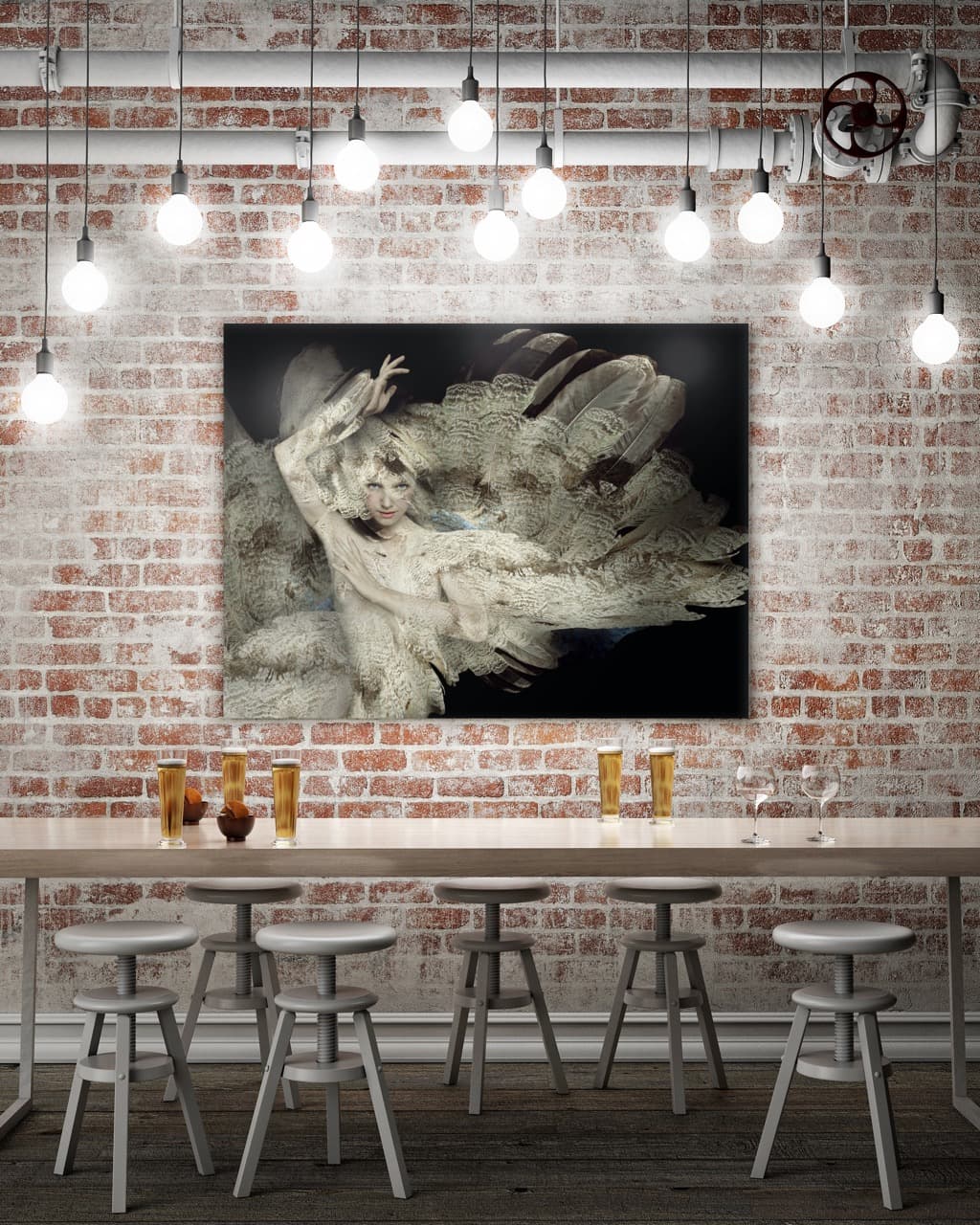
Glastrix — UV Print Studio Berlin Kreuzberg
UV Print Studio Berlin Kreuzberg: Direct Print on Glass, Metal and Wood
Glastrix in Berlin-Kreuzberg has been printing directly on glass, metal, wood and acrylic since 2015 – for B2B clients with no minimum order and short lead times.
Eric Frank · Founder & CEO, Glastrix Berlin-Kreuzberg
For architects, retail brands, restaurateurs, and agencies sourcing high-end surface finishing in Berlin, choosing the right UV print studio is not a minor detail. It determines whether the end result reads as a bespoke solution or a compromise. This guide explains what UV direct printing is, when a local UV print studio in Berlin-Kreuzberg outperforms remote suppliers, which materials can be printed, and what a professional studio must deliver for B2B clients.
What is UV direct printing — and how does it differ from other methods?
UV direct printing — also called UV flatbed printing — is a digital inkjet process in which UV-curing inks are applied directly onto the substrate surface and immediately polymerised by UV light. Unlike foil lamination, screen printing, or offset methods, there are no intermediate steps and no transfer processes: the motif is permanently bonded to the material. The result is a scratch-resistant, UV-stable, and water-repellent surface that holds up under sustained use.
Particularly relevant for B2B applications: UV flatbed printing is largely substrate-agnostic. Glass panels, aluminium composites, solid wood, acrylic, ceramic tiles, copper, mirror, and backlit panels can all be printed — with a primer applied where needed on demanding surfaces such as glass or coated materials. Industrial systems achieve resolutions of 1,200 dpi and above, enabling photorealistic output and precise colour matching to ICC profiles.
When does a local UV print studio in Berlin-Kreuzberg make sense?
Three scenarios in which UV flatbed printing clearly outperforms alternatives:
- Small to mid-sized runs with high customisation. Ten personalised glass prints for a restaurant chain, or five different motifs for a gallery show — conventional offset methods are not economical here. UV direct printing works from a single piece with no meaningful setup time or plate costs.
- Substrates outside the paper and foil segment. The moment the desired material is hard, rigid, or textured, digital foil, latex, and solvent drop out as options. UV flatbed printing is the industry standard for these applications.
- Short turnarounds for live projects. Interior designers in active build projects, retailers with seasonal campaigns, or exhibition builders with fixed deadlines cannot wait weeks for delivery. A local UV print studio in Berlin-Kreuzberg with its own equipment works faster and more flexibly than centralised fulfilment suppliers.
Materials and typical applications
The breadth of printable substrates is one of the main reasons UV flatbed printing has become so dominant in the B2B segment. In practice, clients work with:
- Glass — wall panels in restaurants and bars, shopfronts, room dividers, shower enclosures. Direct print on glass produces a depth and clarity that foil lamination cannot replicate. Floor-to-ceiling glass walls with custom motifs are a classic application for hospitality projects.
- Aluminium and metal — exhibition elements, point-of-sale displays, architectural signage, facade elements. Metal's inherent sheen delivers a visual quality increasingly demanded in premium retail.
- Wood and plywood — interior fittings, furniture components, restaurant décor, decorative elements. The contrast between wood grain and printed motif creates effects that are nearly impossible to reproduce by hand.
- Acrylic glass — light objects, backlit panels, signage. UV printing on acrylic enables translucent colour effects that open up a different dimension when backlit.
- Ceramic and tile — kitchens, bathrooms, public spaces. Custom-motif tiles in short runs are economically viable only with UV printing.
- Mirror and copper — decorative applications in the luxury segment, hospitality, and event design. These substrates are demanding to handle, but deliver an aesthetic quality unreachable with other print methods.
What a professional UV print studio must deliver
Not every supplier advertising UV printing delivers the same quality or flexibility. For B2B clients, these criteria are decisive:
- Machine quality: The output of an industrial UV flatbed plotter differs substantially from entry-level equipment. Resolution, extended colour gamut (CMYK plus white), maximum material thickness, and usable bed size determine which jobs are actually possible.
- No minimum order: For agencies and designers testing single pieces or prototypes, a minimum order value is a genuine barrier. A serious print partner produces single items without a surcharge.
- White-label capability: Agencies, architecture studios, and resellers need a discreet production partner — no studio branding on delivery notes or packaging.
- File review and pre-press advice: Substrate selection, ICC colour profiles, file preparation, varnish options — an experienced print studio gives qualified feedback before production starts, preventing costly correction rounds.
- EU-wide shipping: Projects are rarely confined to one location. A print partner that ships reliably and safely across Europe extends the scope of what agencies and distributors can offer their clients.
Glastrix — UV print studio in Berlin-Kreuzberg since 2015
Glastrix has operated its own print workshop in Berlin-Kreuzberg since 2015. Every order is produced in-house — no outsourcing, no quality loss through third parties. The substrate range covers glass, wood, metal, acrylic, ceramic, copper, mirror, and backlit panels in client-specified dimensions, with no minimum order.
What this looks like in practice: projects such as the glass wall installation for Wasted Talent and the wall artwork for Piris Restaurant — motifs that fit the space exactly, materials that withstand years of use in a public setting, and execution that requires no after-the-fact corrections. Glastrix supplies B2B clients throughout Germany and the EU, including white-label production for agencies and resellers.
Clients planning a project — or wanting to assess colour accuracy and surface quality on their own material before committing — can request a free test print from Glastrix: a single sample in their own artwork and chosen material, with no minimum order and no obligation. Request your free test print here.
From the Glastrix studio
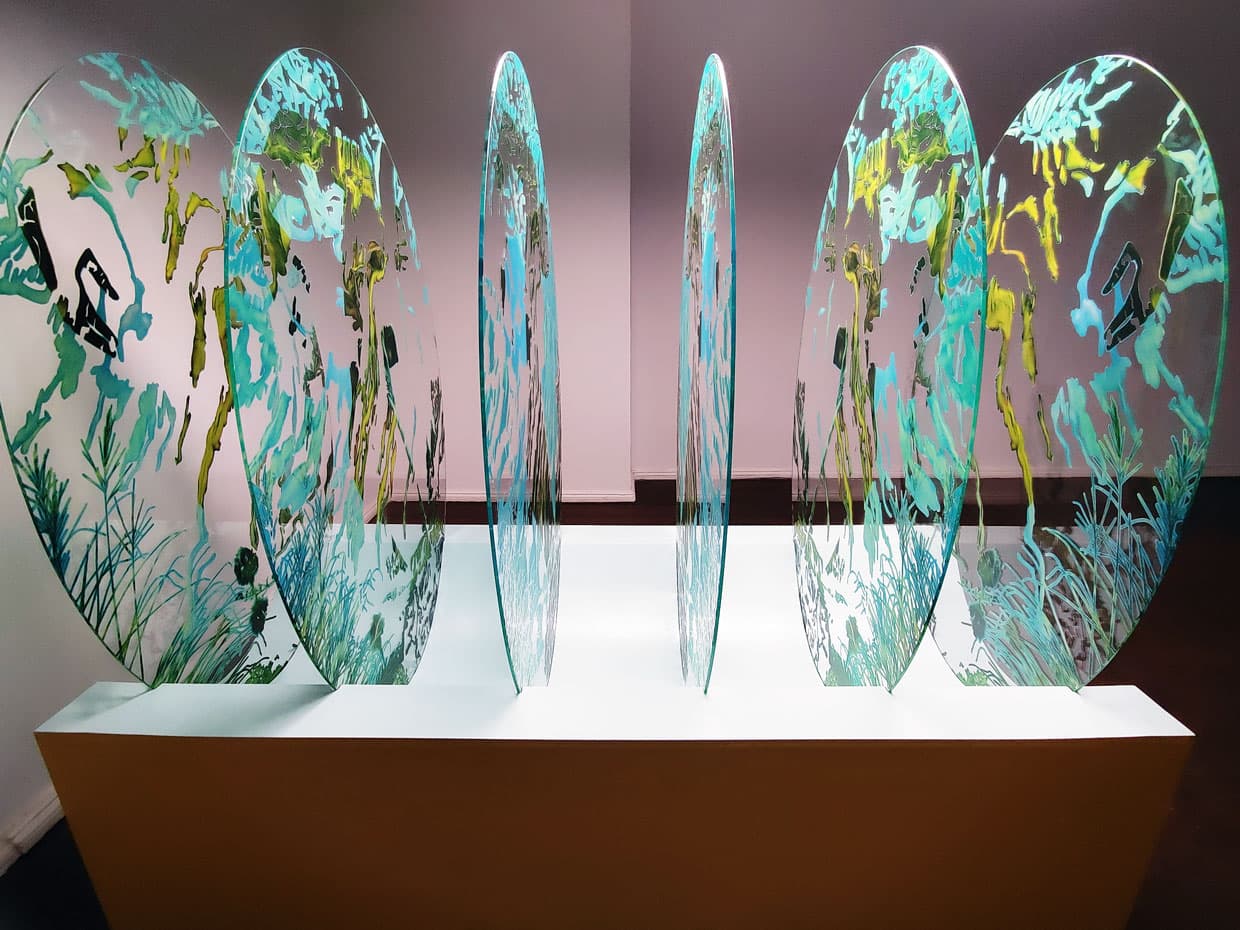
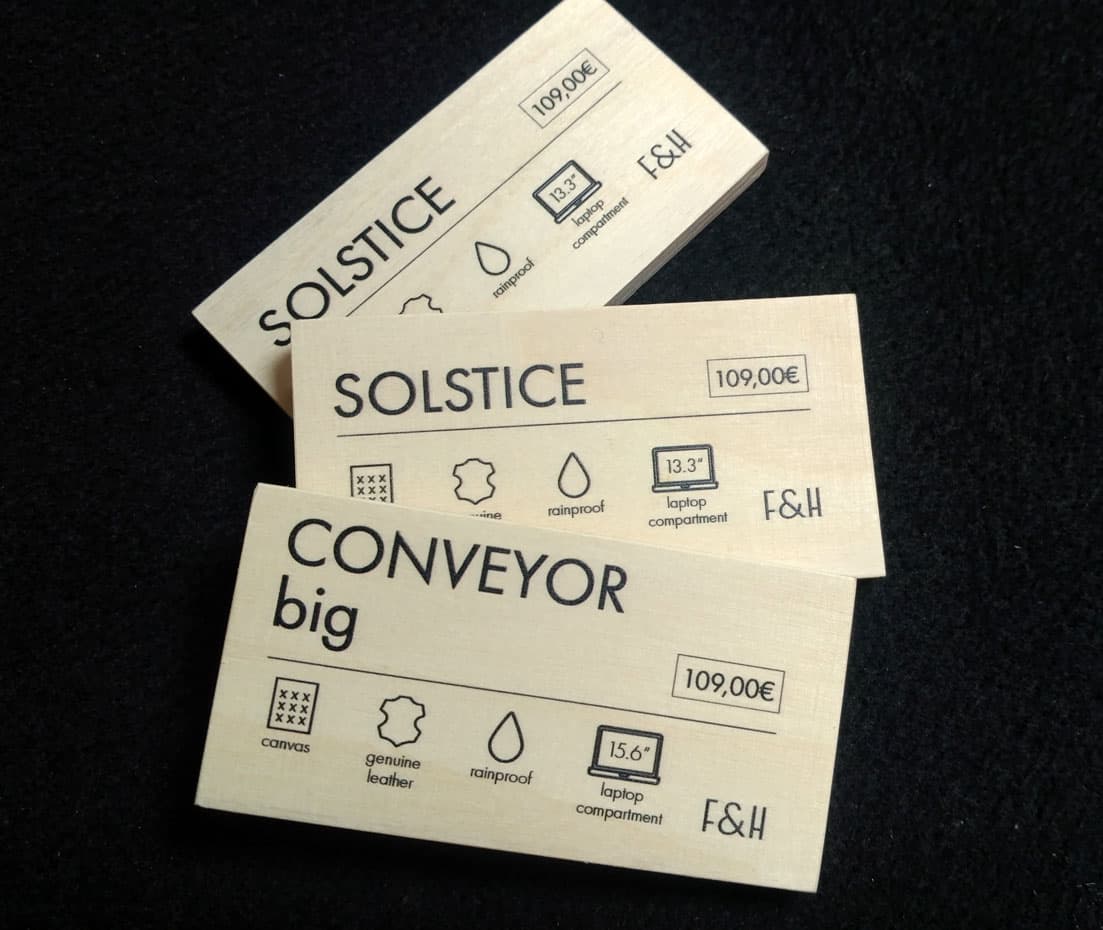
UV direct printing in Berlin-Kreuzberg — glass, metal, wood, acrylic. From a single piece, 48h production.
Request a free test printFrequently asked questions about our UV print studio in Berlin-Kreuzberg
What is UV direct printing and how does it differ from screen printing or foil printing?
UV direct printing (also called UV flatbed printing) is a digital inkjet process in which UV-curing inks are applied directly to the substrate surface and immediately cured by UV light — no film, no screen, no transfer. The result is permanently bonded to the material: scratch-resistant, UV-stable, and water-repellent. Screen printing is designed for flat, stable surfaces and higher quantities. Foil printing requires an intermediate medium and cannot be applied to rigid or textured substrates. UV flatbed printing works from a single piece on glass, metal, wood, acrylic, ceramic, or mirror.
Which materials can be UV-printed at Glastrix in Berlin-Kreuzberg?
Glastrix prints on glass (float glass, tempered, laminated, mirror, back-lacquered), aluminium, steel and copper, solid wood, birch, poplar and MDF, acrylic glass (clear, matte, coloured), ceramic tiles, and backlit panels. All substrates are available from a single piece with no minimum order, at formats up to 3.20 × 2 metres — seamless.
Is there a minimum order quantity, and how long does production take?
No minimum order, no minimum order value, no setup fees. Single pieces are produced at the same rate as short runs. Production time is 48 hours after file approval — no express surcharge. Glastrix ships EU-wide; Berlin clients can also collect directly from the studio at Lausitzer Str. 10, Hof 3, 10999 Berlin-Kreuzberg.
How should I prepare and submit files for UV flatbed printing?
Submit files in PDF or TIFF format at a minimum of 150 dpi at final print size (300 dpi preferred for detail-heavy work). Use CMYK colour mode with an ICC profile matched to your substrate if available. Include a 3–5 mm bleed on all cut edges. Glastrix checks every file before production and responds within one working day with feedback on resolution, colour mode, and any potential issues — preventing costly reprints.
Does Glastrix offer white-label UV printing for agencies and resellers?
Yes. Glastrix produces for agencies, interior design studios, and retailers who resell — with no Glastrix branding on delivery notes or packaging. White-label pricing is available on request. The studio is experienced at working as a silent production partner behind client projects. Enquire via the contact form with your project details.
Weiterführende Artikel
Start your UV print project in Berlin-Kreuzberg
Glastrix prints directly on glass, metal, wood and more — since 2015 at our own studio in Kreuzberg. No minimum order, no setup fee, 48h production.
From 1 piece · No setup fee · 48h · Lausitzer Str. 10, Kreuzberg · EU-wide