
Glastrix — Process Comparison
UV Print vs. Digital Print: What Is the Difference?
Not every printing process suits every substrate. Glastrix explains the difference — technically precise, without marketing rhetoric.
Anyone sourcing custom prints on premium materials in a B2B context — for fit-out projects, retail installation, or hospitality — eventually asks: UV print vs. digital print, where is the difference? The answer is practically relevant. It determines whether a print on glass stays permanent or starts lifting after two years, whether single pieces can be produced economically, and whether the colour quality meets the project's standard. This article explains both processes precisely — without sales rhetoric.
UV print explained: how the process works
UV print — also called UV direct print or UV flatbed print — is an inkjet process in which UV-curing inks are applied directly onto the substrate. The key: the ink does not penetrate the material. Instead, it cures under UV light in fractions of a second, forming a durable layer directly on the surface. This makes UV print possible on almost any rigid or semi-rigid substrate — glass, metal, wood, acrylic, ceramic, copper, mirror, and backlit panels are typical applications.
Once cured, the print layer is water-, UV-, and abrasion-resistant. For hospitality businesses needing weatherproof wall panels or counter surfaces, UV direct print is the preferred solution. The same applies to galleries producing art prints on acrylic or glass, and to interior designers commissioning custom pieces on unconventional materials.
Digital print: strengths and limitations
Standard digital print — most commonly understood as inkjet printing on flexible media — uses solvent-based, water-based, or latex inks on absorbent or coated substrates. Paper, film, textile, wallpaper: these are its natural domains. The ink is absorbed by the substrate or adheres to a special primer coating. This makes digital print efficient for large areas on standard media — banners, window lettering on film, wallpapers in 5 × 3 metre formats.
The decisive limitation: on hard, non-porous materials like uncoated glass, metal, or ceramic, standard digital print simply does not work. It requires either a bonding primer coating or a switch to a different process — typically UV print.
UV Print vs. Digital Print: The Four Key Differences
Substrate compatibility
UV print bonds directly to rigid, non-absorbent materials. Digital print requires flexible or absorbent substrates — or a specialised primer that adds cost and a processing step.
Durability
UV-cured inks are mechanically tougher. On glass or metal they are scratch- and water-resistant. Film print lasts 3–7 years with lamination for outdoor use — UV print on glass stays significantly more stable and requires no lamination.
Colour brilliance and visual depth
UV print on glass, acrylic, or mirror achieves a luminosity and depth effect not attainable on film or paper. For showrooms, galleries, or hotel lobby installations, this is a material quality factor that directly affects how the end product is perceived.
Run size
UV print is economically viable from a single piece — no minimum quantity, no surplus stock. Digital print on roll media has its cost advantage mainly in large areas on standard media.
Added to this are special effects exclusive to UV print: white underprint (essential for opaque colour on transparent materials like glass or acrylic), spot varnish effects, and relief structures — all in a single print pass, at no additional processing cost.
Which process suits your project?
UV print is the clear choice when…
- →The substrate is glass, metal, wood, ceramic, acrylic, or copper
- →Individual pieces or short runs without minimum quantities are needed
- →Durability in hospitality or fit-out environments is critical
- →White print, relief effects, or backlit panel illumination are part of the design
- →Print quality is a sales argument — such as for retailers or interior designers delivering to end customers
Digital print makes sense when…
Digital print is the better choice when producing large-format roll media on film, paper, or textile, when outdoor advertising with lamination is sufficient, or when high quantities and low cost-per-square-metre are the primary criteria.
For most B2B projects in fit-out, hospitality, retail design, and gallery production, UV direct print is the technically superior choice — and in the combination of single-piece production and material range, it has no real alternative.
UV print from one piece — Glastrix since 2015
1 piece
Minimum order quantity
48 h
Production time (material in stock)
5 years
Guarantee on every print
Glastrix has operated a UV direct print specialist lab in Berlin-Kreuzberg since 2015. Printed on glass, metal, wood, acrylic, ceramic, copper, mirror, and backlit panels — in custom formats up to 3.20 × 2 metres, seamlessly.
For agencies, retailers, and interior designers, Glastrix also offers white-label fulfilment: orders produced discreetly and shipped directly to end customers across the EU — without Glastrix branding, with your own delivery note on request.
From our production
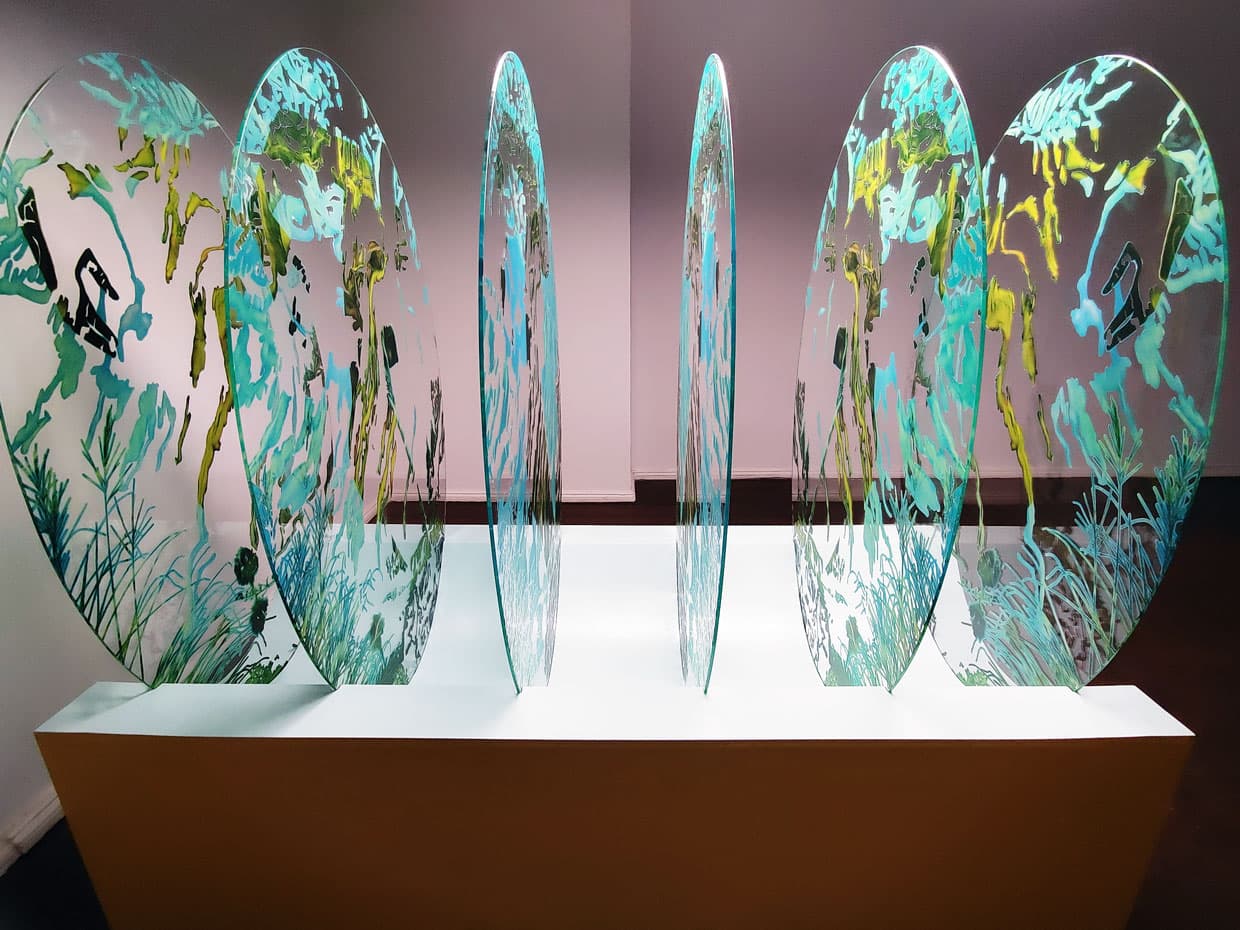
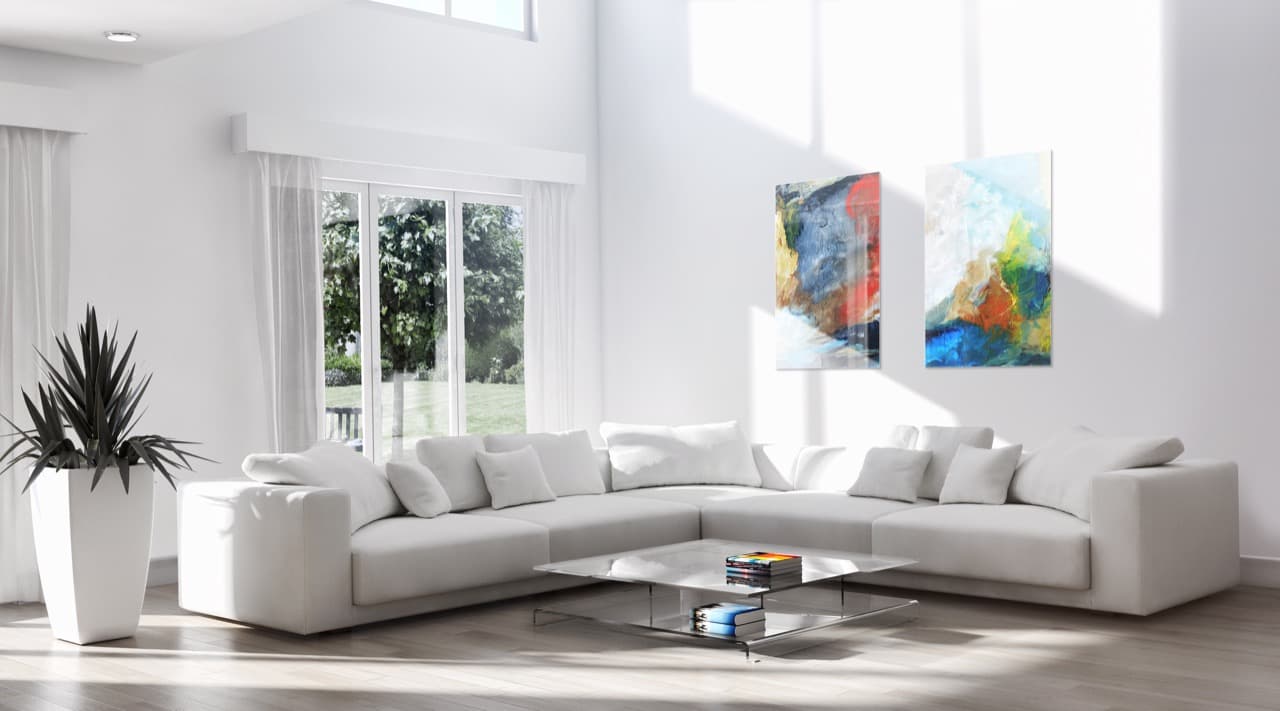
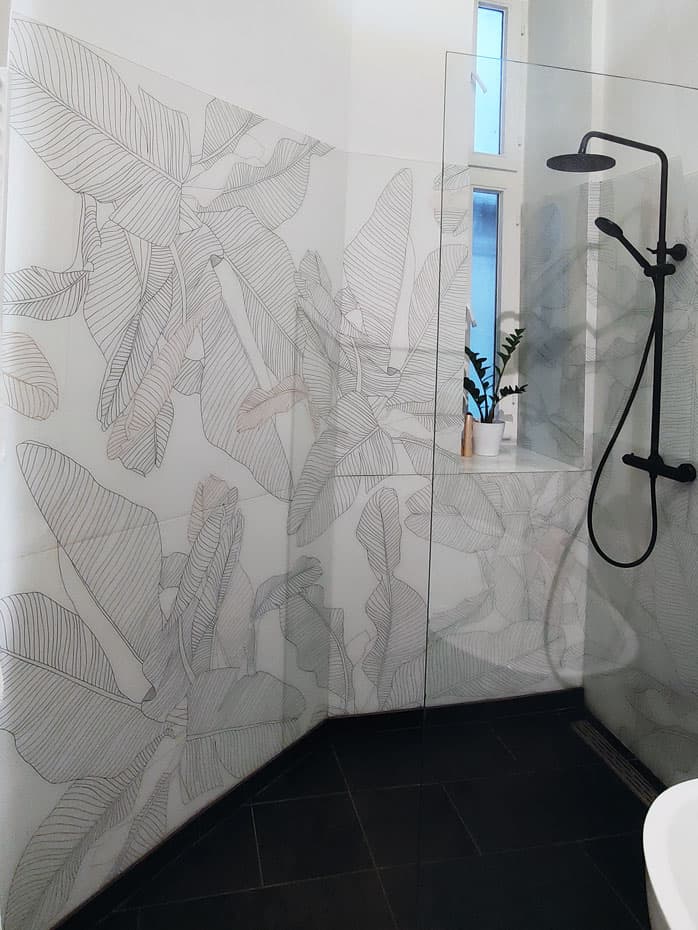
This quality is achievable for any project — from a single piece.
Request a free test printFrequently asked questions
Can UV print be applied directly to glass, metal, or ceramic?
Yes. UV-curing inks are applied without any intermediate medium directly onto rigid, non-porous materials and cured by UV light in fractions of a second. Standard digital printing does not work on these materials — it requires absorbent or specially primed substrates.
Why is UV print more durable than standard digital print on glass?
UV ink cures photochemically directly on the surface — no film, no adhesive in between. The result is water-, UV-, and abrasion-resistant with no lamination required. Standard digital print on film media lasts 3–7 years with lamination; UV print on glass remains significantly more stable, long-term.
Is UV print economical for small runs?
Yes. UV direct print works digitally without printing plates or screens — from a single piece, no setup fee, no minimum order quantity. This makes it ideal for custom pieces, pilot runs, and projects where each item carries a unique design.
What special effects are only possible with UV print?
White underprint for opaque colours on glass and acrylic, relief textures through multiple ink passes, and backlit-optimised colour calibration for illuminated panels — all in a single print run, at no extra cost.
When is standard digital print the better choice?
For large-format roll media on film, paper, or textile — banners, wallpapers, window lettering on vinyl — standard digital print is more efficient and cost-effective. UV direct print is clearly superior as soon as the substrate is rigid, non-porous, or moisture-exposed.
"We have already worked with Glastrix on several projects and are always impressed by how quickly and competently solutions are found and realised. We know of no better address in Berlin for prints."
Request a Free Test Print
No setup fee. No minimum. We print your artwork on the material of your choice — so you can see the difference yourself.
From 1 piece · 48h · No minimum order