
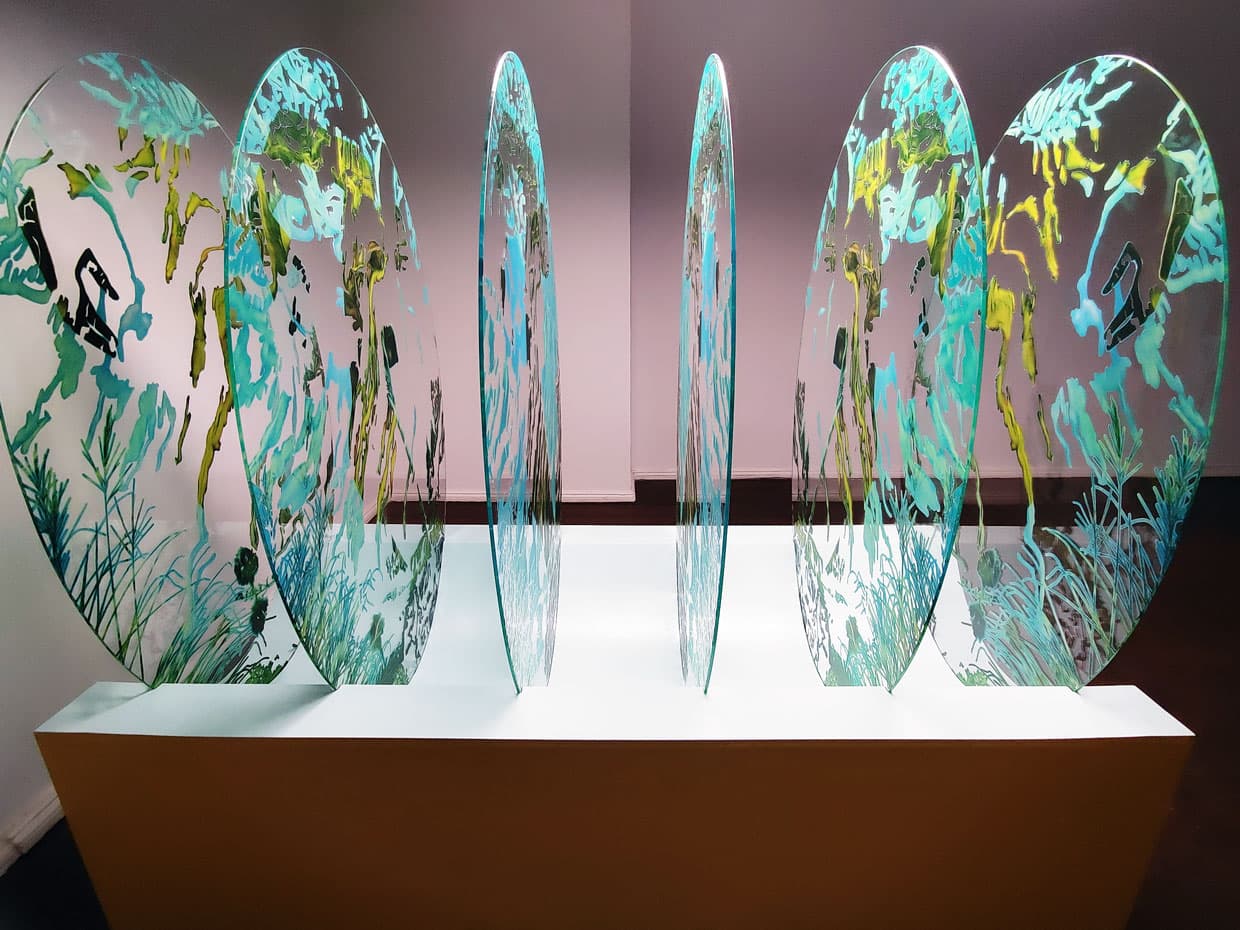
Glastrix — UV Print on Glass
UV Print on Glass in Berlin: From First Design to Finished Panel
UV glass printing in Berlin – Glastrix produces individual panels and small batches in Kreuzberg: ESG, VSG, mirror, acrylic, no minimum order, 48h turnaround.
Eric Frank · Founder & CEO, Glastrix Berlin-Kreuzberg
UV print on glass Berlin is no longer a niche service — it has become the standard for architects, interior designers, restaurateurs, and private clients who want a durable, high-resolution image on a glass panel. Whether the project is a kitchen splashback, a frameless shower screen, a glass office partition, or an art installation, the core questions are always the same: Where is it produced? What is the lead time? And what happens if something needs to change? This guide walks through the complete process as it runs at Glastrix in Berlin-Kreuzberg.
What is UV printing on glass — and why not film?
UV direct printing applies UV-curing inks straight onto the glass surface without any intermediate film or laminate. The inks are cured within milliseconds by UV light and bond permanently to the substrate. The result is photorealistic, scratch-resistant, waterproof, and UV-stable — the image will not peel, bubble, or fade under sunlight as vinyl film does. Every panel produced at Glastrix carries a five-year guarantee. For interiors where longevity and maintenance simplicity matter, UV printing Berlin outperforms any film-based alternative on a long enough timeline.
Glass types available for UV printing
UV flatbed printing works on virtually any flat, rigid substrate. For glass specifically, Glastrix offers the following options:
- Float glass — standard clear glass, easy to cut to any shape, ideal for interior installations where no safety glazing standard applies.
- Low-iron / ultraclear glass (Weißglas) — produced with reduced iron content, giving it significantly less green tint than standard float glass. Also sold under brand names Optiwhite and Sapphire Glass. The lower tint matters most for reverse printing: it keeps white backgrounds truly white and bright colours accurate. For dark motifs, standard float glass is adequate. Available in 2 mm, 6 mm, and 8 mm; the 6 mm and 8 mm versions are also available as ESG.
- ESG / tempered safety glass — thermally toughened so that on impact it breaks into small, blunt granules rather than dangerous shards. Mandatory for shower enclosures, kitchen splashbacks larger than 0.5 m², and most commercial glazing projects. Critical constraint: ESG must be cut to its final dimensions before the print run — any post-print cutting will shatter the panel.
- VSG / laminated safety glass — two glass panes bonded by an interlayer film. For partitions, glass floors, balustrades, and any project with elevated safety requirements where the panel must stay intact on impact.
- Mirror — printed with transparent ink for a floating, ghost-image effect, or with a white underbase for full-opacity graphics. Popular for boutique signage, bar backdrops, and retail installations.
- Back-lacquered glass — coloured glass used as a kitchen or bathroom splashback, optionally overprinted with UV graphics on the front face.
- Acrylic glass — visually similar to clear glass but lighter and laser-cuttable after printing; well suited for display panels, NFC cards, and lightbox graphics.
Front print vs. reverse print — a practical guide
There are two fundamentally different approaches to printing on glass, and the choice affects both the visual result and the longevity of the piece.
- Front printing places the image on the viewer-facing side of the glass. The colour reads directly and immediately — no glass between the eye and the ink. The trade-off is that the printed surface is exposed to touch, cleaning agents, and mechanical wear over time.
- Reverse printing applies the image mirror-image to the back of the glass; the viewer looks through the glass to see it. The glass itself becomes the protective layer, shielding the ink from all physical contact. The visual effect is different too: the image appears to sit behind the glass surface, giving it a depth and premium quality that front printing cannot replicate. Reverse printing is the recommended approach for kitchen splashbacks, reception counters, conference room glass walls, and any installation where the printed face will be regularly touched or wiped.
One practical note for file preparation: reverse-print files must be delivered already mirrored. Glastrix checks this during the file review step and flags it before production begins.
The ordering process, step by step
- Enquiry: Submit dimensions, glass type, and your artwork (or a reference to the file) via the contact form or by email. For ESG projects, confirm that dimensions are final — post-print cutting is not possible.
- File review: Glastrix checks resolution, bleed, colour mode, and — for reverse prints — whether the file is correctly mirrored. Feedback arrives within one business day, with specific guidance on any adjustments required before production costs are incurred.
- Approval: Once the file is approved, production starts. Lead time from approval: 48 hours, provided the material is in stock. No rush surcharge.
- Quality check: Every panel is visually inspected before dispatch. If there is any discrepancy between expectation and result, you receive a direct call — not a silent shipment.
- Delivery or collection: EU-wide shipping in specialist packaging designed for glass panels. Clients in Berlin can collect directly from the studio at Lausitzer Str. 10, Hof 3, 10999 Berlin-Kreuzberg.
Formats up to 3.20 × 2 metres — seamless
UV flatbed printing is not constrained by roll width or format modules. Glastrix prints on glass panels up to 3.20 × 2 metres in a single pass — no joining strips, no overlap lines, no seams. Custom dimensions, non-rectangular cuts (carried out before printing), and individual edge treatments are standard, not a surcharge. For large-format interior projects — hotel lobbies, restaurant feature walls, open-plan office partitions — this means the design can be realised exactly as drawn.
Studio visit and free test print
The Glastrix studio in Berlin-Kreuzberg is open for visits by appointment. For clients who want to assess the result before commissioning a full run, Glastrix offers a free test print in the client's own motif and glass type — a single piece, no minimum order, no obligation. For architects and designers coordinating projects with tight site schedules, this is the most direct form of quality assurance available before committing to a series. Request a free test print to get started.
UV glass printing in practice
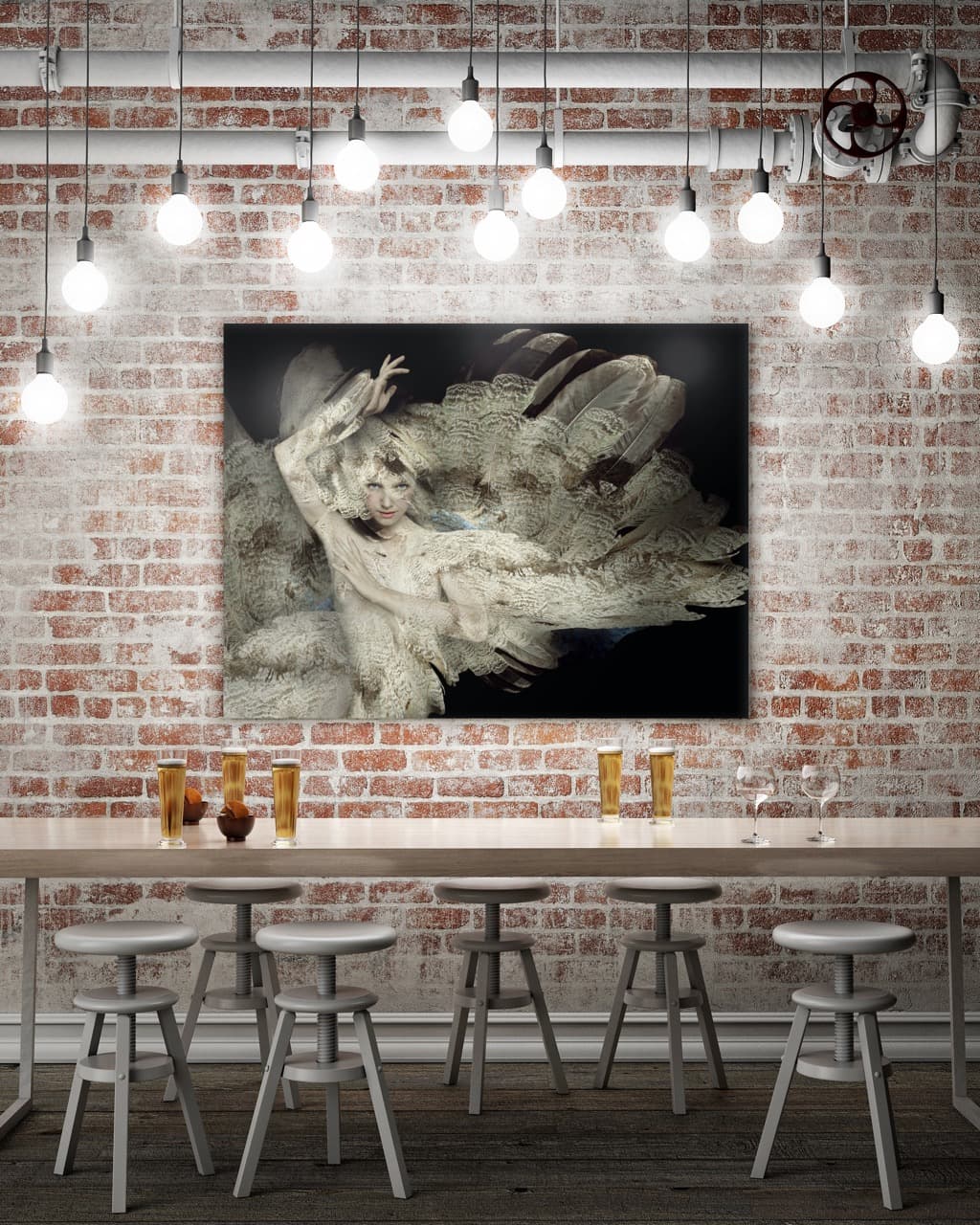
UV direct printing on glass in Berlin-Kreuzberg — ESG, VSG, mirror, acrylic. From a single piece, 48h production, seamless formats up to 3.20 × 2 m.
Request a free test printFrequently asked questions about UV print on glass in Berlin
What is UV direct printing on glass?
UV direct printing is a process in which UV-curing inks are applied directly to the glass surface — no film, no laminate — and instantly cured by UV light. The result is scratch-resistant, waterproof, lightfast, and permanently bonded. Unlike vinyl film, it cannot peel, bubble, or fade under UV exposure. Every Glastrix print carries a 5-year guarantee.
Which glass type should I use for a kitchen splashback — ESG or float glass?
For kitchen splashbacks larger than 0.5 m², toughened safety glass (ESG / tempered glass) is legally required in most installations. ESG shatters into small, blunt fragments on impact rather than sharp shards. Float glass is suitable for small decorative panels without safety requirements. One critical point: ESG must be cut to its final dimensions before printing — any cutting after tempering will shatter the panel.
Front print vs. reverse print — which should I choose?
With front printing, the image sits on the viewer-facing side of the glass: vivid colour, but the ink is exposed to touch and mechanical wear. With reverse printing, the image is printed mirror-image onto the back face and viewed through the glass — the glass itself protects the ink from contact and gives the motif a floating, layered depth. Reverse printing is recommended for kitchen splashbacks, reception counters, and glass partitions where longevity and a premium look matter.
How do I prepare files for glass printing?
Supply files as PDF, TIFF, or high-quality PNG. For panels 50 cm or larger, a minimum of 150 dpi at final size is sufficient; for smaller pieces, 300 dpi. Colour mode: RGB (Glastrix handles the conversion to the print profile). For reverse printing, the file must be supplied already mirrored. Glastrix checks every file before production starts and reports any issues within one business day — before costs are incurred.
What is the lead time and can I collect in Berlin?
Production takes 48 hours from file approval, provided the material is in stock — no rush surcharge. Clients in Berlin can collect directly from the studio at Lausitzer Str. 10, Hof 3, 10999 Berlin-Kreuzberg. EU-wide shipping in specialist packaging is also available.
Weiterführende Artikel
Order UV glass printing in Berlin
Glastrix prints directly on ESG, VSG, mirror, acrylic and more — in Berlin-Kreuzberg. No minimum order, no setup fee, 48h production, 5-year guarantee.
From 1 piece · No setup fee · 48h · Berlin-Kreuzberg · EU-wide